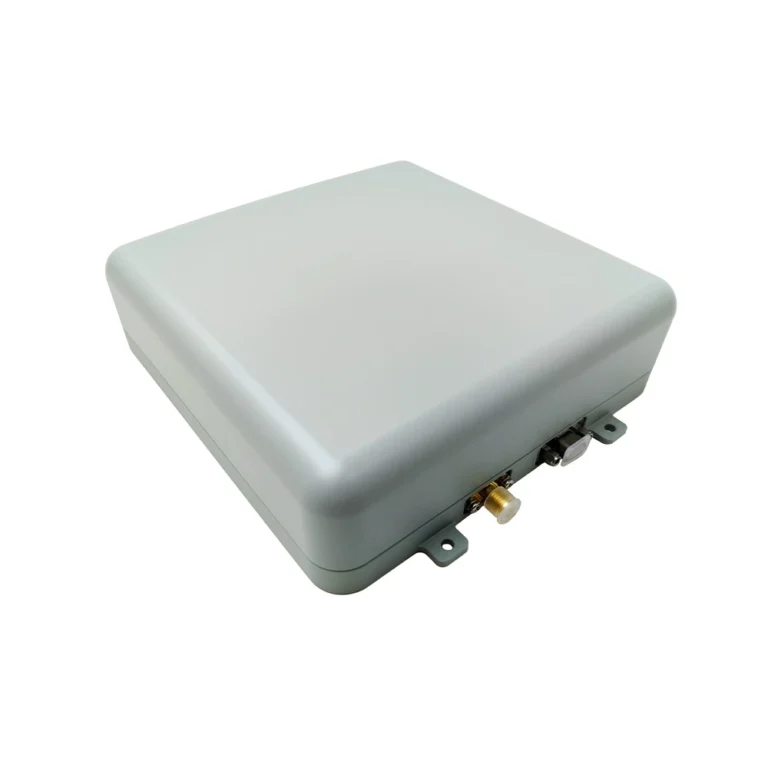
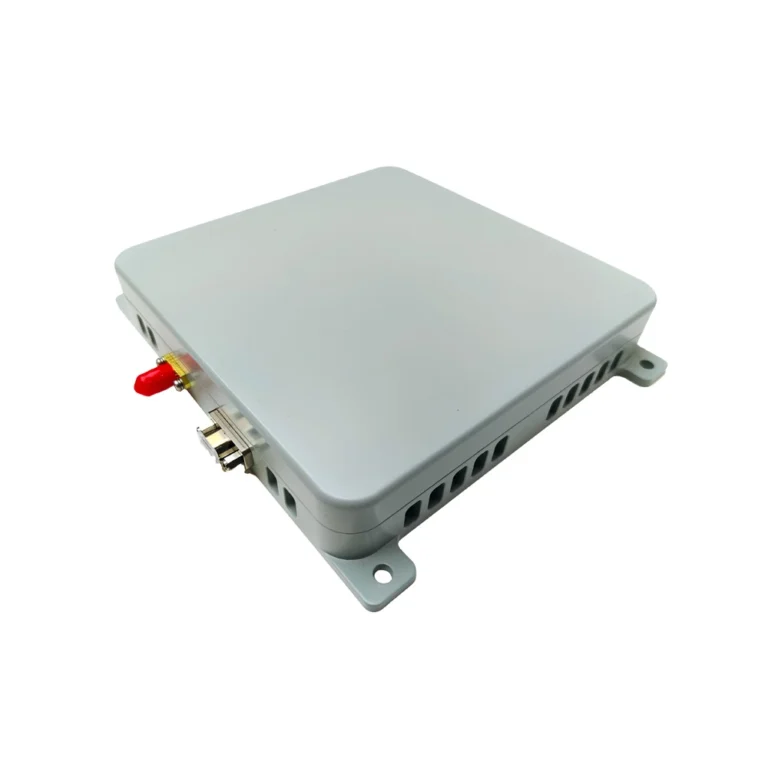
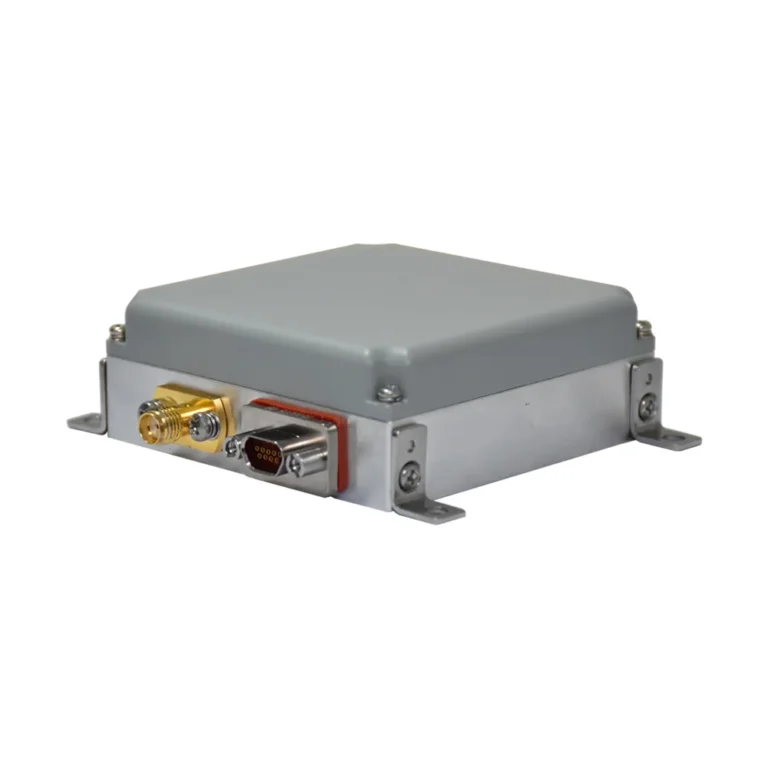
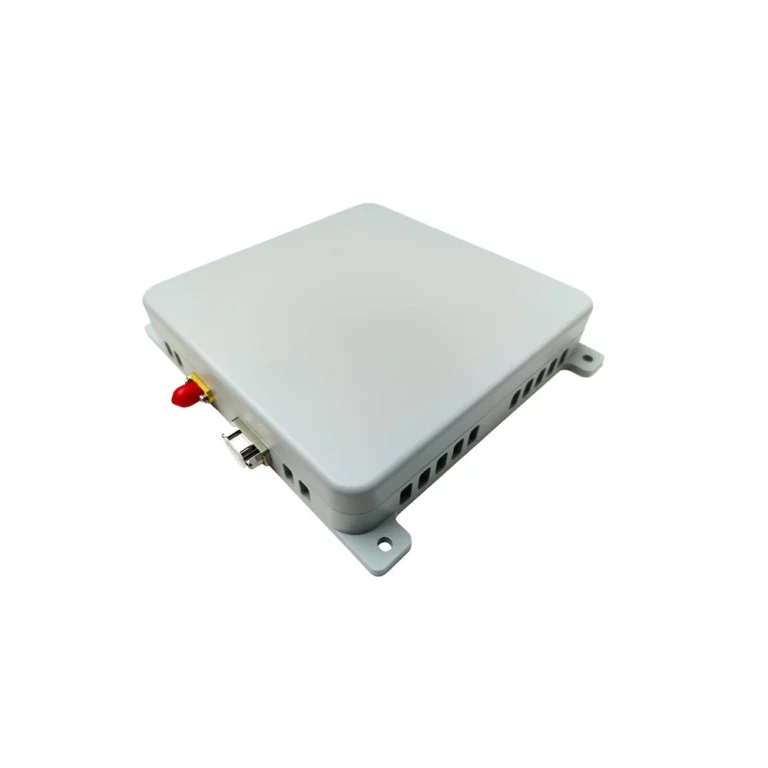
Global Navigation Satellite System (GNSS) signals arrive at the Earth’s surface with extremely low power (typically below –130 dBm), making them highly susceptible to unintentional radio‑frequency interference from sources such as 5G base stations, broadcast transmitters, industrial equipment, as well as occasional intentional jamming (e.g., privacy protectors or illicit signal blockers). Any degradation or loss of positioning, navigation, and timing (PNT) services can pose serious risks to critical civilian infrastructures—including communication networks, power grids, financial transaction systems, and autonomous driving operations.
The dual‑band Controlled Reception Pattern Antenna (CRPA) is a sophisticated technological solution specifically designed to address this challenge. Far from being a simple receiving antenna, it is an integrated anti‑jamming system that combines a multi‑element array, an adaptive signal processor, and advanced RF filtering. Its purpose is to effectively extract clean GNSS signals from contaminated electromagnetic environments, thereby ensuring the reliability of civilian PNT applications.
Operating Principle: The Art of Dynamic Null Steering
The core philosophy of a CRPA is proactive environmental sensing and real‑time adjustment of its reception pattern to achieve “directional suppression.”
Spatial Sensing via Multi‑Element Array
The antenna consists of multiple independent radiating elements (typically 4, 7, or more) arranged in a specific geometric configuration. Each element independently receives signals from satellites as well as interference originating from various directions, providing spatial samples of the incident electromagnetic field.
Adaptive Spatial Filtering
An internal digital processor applies amplitude and phase weightings to the signals from each element. Using adaptive algorithms (e.g., the power‑inversion criterion or minimum variance distortionless response), the system computes optimal weighting coefficients in real time. The result is the synthesis of a deep null in the direction of the interfering source—effectively creating a blind spot in the antenna’s reception pattern. This null attenuates the interference power by tens to hundreds of times, while preserving satellite signals arriving from other directions.
Full‑Hemisphere Coverage
The null can be dynamically steered to any azimuth within the upper hemisphere, and even slightly below the horizon. Consequently, regardless of whether the jammer is located on the ground, on a nearby structure, or on an airborne platform, the CRPA can effectively mitigate its impact.
Key Technical Features
Dual‑Band, Multi‑Constellation Compatibility
The “dual‑band” capability means the antenna covers two primary GNSS frequency bands simultaneously (e.g., L1/L2 or L5/E6). This enables it to serve all major navigation satellite systems—GPS, GLONASS, Galileo, and BeiDou. Furthermore, dual‑frequency reception allows for ionospheric delay correction, significantly improving positioning accuracy.
Simultaneous Suppression of Multiple Interferers
Thanks to the array’s degrees of freedom and advanced algorithms, the system can concurrently counter multiple jammers from different directions and at different frequencies. This ensures robust performance even in complex electromagnetic environments such as urban canyons or densely deployed base‑station areas.
Broadband RF Filtering
The front‑end integrates high‑performance band‑pass filters that provide exceptional out‑of‑band rejection (e.g., against communication transmitters or radar pulses). This prevents receiver front‑end saturation and maintains linear operation over a wide dynamic range.
Plug‑and‑Play Compatibility
High‑end CRPA designs embed the anti‑jamming processing within the antenna module itself, outputting a standard RF signal. This means users can gain anti‑jamming capabilities without replacing or modifying their existing commercial off‑the‑shelf GNSS receivers, greatly reducing system integration complexity.
Status Awareness and Alarming
Some CRPA units include self‑diagnostic functions that output information such as interference frequency bands, approximate direction of arrival, and signal strength via data interfaces. This provides maintenance personnel with real‑time electromagnetic situational awareness, facilitating troubleshooting and spectrum management.
Typical Civilian Application Scenarios
Critical Infrastructure Timing
Communication base stations, power‑grid synchronisation networks, and data‑centre time servers rely on high‑precision time references. CRPA systems prevent large‑scale timing loss caused by nearby RF interference, thereby safeguarding network stability and grid reliability.
Autonomous Driving and Intelligent Transportation
Autonomous vehicles, logistic drones, and port automation equipment operate in dense urban environments with numerous wireless signals. CRPA ensures that GNSS signal loss does not lead to safety‑critical failures.
Civil Aviation and Maritime Navigation
Commercial aircraft and vessels often operate near airports and harbours where radar and communication transmitters are abundant. CRPA guarantees the continuity and integrity of navigation and surveillance data.
Precision Agriculture and Surveying
Agricultural machinery using GNSS‑based auto‑steering, as well as high‑accuracy mapping equipment, may work near meteorological radars or broadcast stations. CRPA effectively rejects these out‑band emissions, maintaining positioning accuracy.
Urban Management and Emergency Communications
Public‑safety vehicles (police, fire, ambulance) and urban grid‑monitoring devices benefit from CRPA’s immunity to localised jamming, ensuring reliable location and timing for time‑critical response.
Comparison with Fixed‑Reception‑Pattern Antennas (FRPA)
Traditional anti‑jamming antennas are often Fixed Reception Pattern Antennas (FRPA), whose nulls are fixed at the design stage and typically only suppress low‑elevation (near‑horizon) interference. In contrast, the CRPA’s nulls are dynamically generated and real‑time steered, covering the entire upper hemisphere. This makes the CRPA far more flexible and effective. Of course, the multi‑element array and complex signal processing entail higher cost and power consumption, but for high‑reliability civilian systems, this is a justifiable investment in performance.
Conclusion
The dual‑band CRPA represents a state‑of‑the‑art solution for GNSS anti‑jamming. Through intelligent spatial filtering, it builds an invisible “isolation wall” between interference and the desired signals, making it a core component of modern high‑reliability civilian PNT systems. As emerging fields such as the Internet of Things, smart cities, and autonomous systems demand ever‑increasing security and robustness for positioning and timing, CRPA technology is rapidly transitioning from niche specialised markets to broader commercial adoption, providing a solid foundation for the stable operation of our digital society.
SafeGNSS’s SGX-202 is a 4+4 dual-array design anti-jamming antenna that supports 3 (L1) + 3 (L2) Simultaneous Independent Nulling. Simultaneous Active Bands: GPS L1 and L2, GALILEO E1, and BEIDOU B1. SafeGNSS is a company specializing in the manufacture of anti-jamming antennas. If you have any needs for anti-jamming antennas, please contact us.