As Global Navigation Satellite Systems (GNSS) become central to vessel navigation, docking, dynamic positioning, and collision avoidance, the vulnerability of their signals to interference and spoofing has emerged as a primary operational risk. The Controlled Reception Pattern Antenna (CRPA), an advanced smart antenna technology, offers a key solution. This paper examines how CRPA functions in the maritime environment, its mechanisms for countering multipath effects and electromagnetic interference, and its value in both military contexts (anti-jamming, anti-spoofing) and civilian ones—particularly in electromagnetically complex ports. The study indicates that CRPA is a core technology for improving positioning continuity, reliability, and safety in challenging signal environments.
Keywords: Controlled Reception Pattern Antenna (CRPA); GNSS anti-jamming; vessel navigation; multipath effect; port safety
1. Introduction
Modern vessel navigation and operations rely heavily on the precise position, velocity, and time (PVT) information provided by GNSS. From open-sea navigation to precision docking in ports, any interruption or error in GNSS signals can lead to serious incidents, logistical delays, or safety hazards. However, the satellite signals received by shipboard GNSS receivers are extremely weak (often below -125 dBm) and are therefore highly susceptible to various forms of interference.
Interference falls into two categories. Intentional interference includes electronic warfare jamming and portable jammers used near sensitive non-military areas such as ports or government facilities. Unintentional interference mainly comes from out‑of‑band emissions from onboard high‑power communication systems and radar, as well as multipath reflections from the sea surface and port structures.
Traditional mitigation methods, such as filters or single‑antenna nulling techniques, struggle against this increasingly complex and dynamic interference environment. The CRPA, with its multi‑element array and adaptive signal processing, provides an active, intelligent, and highly effective means of protecting GNSS signals aboard vessels.
2. CRPA Operating Principle and Core Advantages
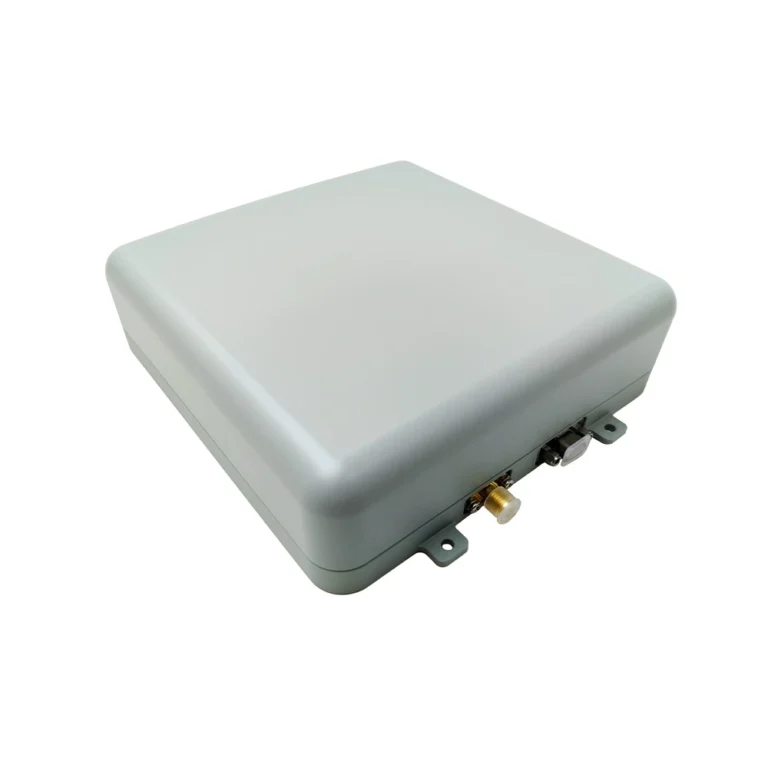
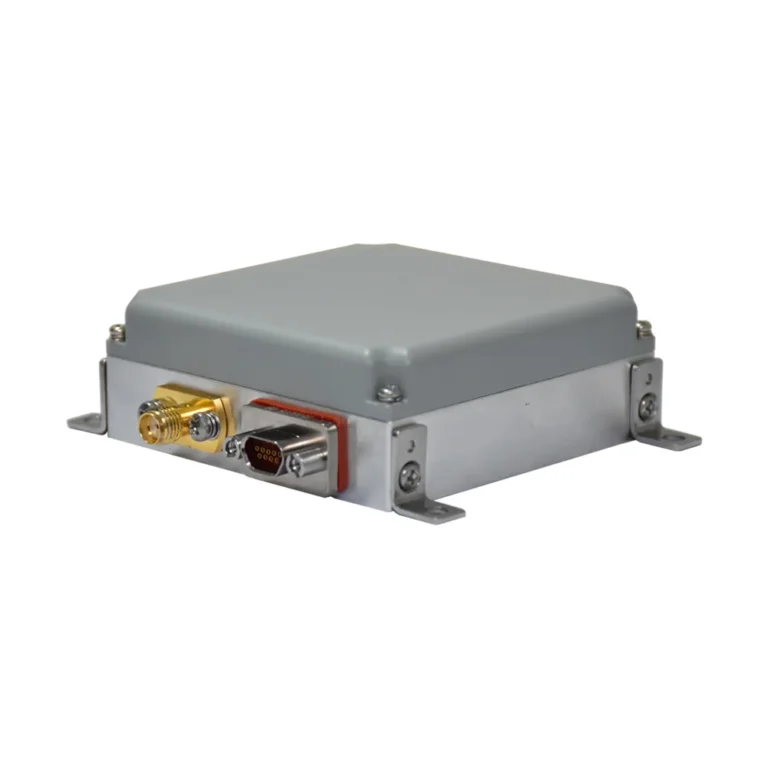
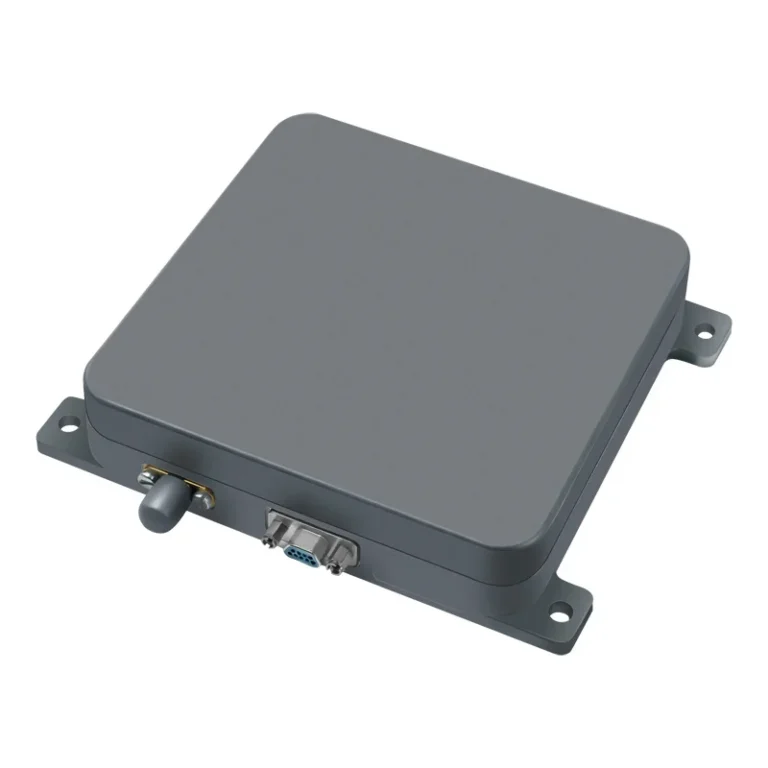
A CRPA consists of an antenna array (typically with four or more elements) and a digital signal processing module. It operates as follows:
- Interference sensing: The system continuously monitors the GNSS signals arriving at each array element. By comparing amplitude and phase differences across elements, the CRPA accurately computes the direction of arrival (DOA) of interference, including intentional jammers and multipath reflections.
- Adaptive nulling: Using the DOA information, the digital processor calculates and applies complex weights to the array, shaping the antenna pattern. A deep “null” is steered toward the interference source, reducing its gain by 20–40 dB, while maintaining or even enhancing gain toward legitimate satellites overhead.
Compared to conventional antennas, the key advantages of a CRPA are its spatial selectivity and environmental adaptability. Instead of passively receiving signals, it actively shapes its reception pattern to preferentially receive useful signals from the sky while rejecting signals from other directions.
3. Key Applications Aboard Vessels
3.1 Countering Intentional and Unintentional Electromagnetic Interference
This is the primary military value of a CRPA. Electronic warfare systems on modern warships may include deliberate jamming of GNSS bands, and a CRPA can effectively counter such threats. For non‑military vessels operating in congested ports or fairways, the same capability is equally critical:
- Countering portable jammers: Personal portable GNSS jammers (typically 1–25 W, with an effective radius of several kilometres) are sometimes used near sensitive port areas. A CRPA’s adaptive nulling can directly cancel this interference, preventing a loss of positioning.
- Mitigating onboard self‑interference: High‑power systems such as satellite communication terminals and radar can generate out‑of‑band harmonics that interfere with a nearby GNSS antenna. A CRPA provides strong out‑of‑band rejection (typically >80 dB from 700 to 2500 MHz) , effectively filtering out non‑GNSS spurious emissions and ensuring electromagnetic compatibility.
3.2 Mitigating Sea Surface and Port Multipath Effects
Multipath is a common cause of reduced positioning accuracy. Over the sea surface, strong signal reflections can cause unstable tracking and metre‑level position errors.
By applying beamforming techniques, a CRPA improves the front‑to‑back ratio of the antenna, increasing gain toward zenith (where satellites are located) and suppressing gain at low elevation angles (where reflections from the sea or port structures arrive). This feature is particularly valuable when a vessel is entering a narrow channel or docking, as it significantly improves positioning accuracy and smoothness.
3.3 Real‑Time Situational Awareness
A modern CRPA does more than just null interference; it also acts as a radio‑frequency threat sensor. Via standard interfaces (e.g., NMEA 0183), it can provide the vessel’s integrated navigation system or operator with real‑time information on the interference environment, including:
- Whether interference is present, and its azimuth and elevation.
- The threat level and type of interference.
- The antenna’s own operational status (normal operation, anti‑jamming active, self‑test results, etc.).
This gives the operator valuable awareness of the RF environment, helping to determine the source of interference (e.g., a jammer in the port or a nearby vessel’s radar) and to decide on a course of action, such as switching to a backup system or notifying port authorities.
4. A Typical Non‑Military Use Case: Port Operations
In the non‑military domain, the need for CRPA has grown rapidly in ports, anchorages, and busy fairways where the electromagnetic environment is increasingly complex. The following table summarises common problems and the corresponding CRPA solutions.
| Specific Problem | Description | CRPA Solution | Typical Performance |
|---|---|---|---|
| Multipath from port structures | Reflections of satellite signals off port structures, large ships, and containers cause positioning errors. | Improve front‑to‑back ratio; suppress low‑elevation reflections; focus on direct signals from overhead. | Adaptive nulling provides 20–40 dB attenuation in the direction of the interfering signal. |
| In‑band interference from onboard equipment | High‑power equipment such as Inmarsat or VSAT terminals generates out‑of‑band emissions that can desensitise the GPS L1 front‑end. | High‑performance out‑of‑band filtering; reject non‑GNSS signals before they reach the receiver. | >80 dB rejection from 700 to 2500 MHz. |
| Intentional jamming in port areas | Portable GPS jammers may be used near sensitive zones (e.g., military areas, government facilities) or during illicit maritime activities. | Adaptive nulling; detect the direction of the jammer in real time and steer a deep null to cancel it. | Real‑time jammer direction finding and null steering. |
5. Representative Performance Specifications
The following key parameters, taken from a typical CRPA designed for harsh maritime environments, illustrate current performance levels:
- In‑band null depth: 20–40 dB (sufficient to cancel most portable jammers and restore satellite lock).
- Out‑of‑band rejection: >80 dB from 700 to 2500 MHz (isolates the GNSS antenna from spurious emissions generated by onboard communications equipment).
- Operating temperature: -40°C to +85°C (suitable for deck installations worldwide).
- Ingress protection: IP69K (resists high‑temperature, high‑pressure water jets, salt spray, and rain).
- Supported signals: GPS L1/L2, GLONASS L1/L2, Galileo E1/E5b, BeiDou B1/B2 (multi‑constellation, multi‑frequency – essential for redundancy under interference).
6. Conclusion
As vessel navigation becomes ever more dependent on GNSS, the CRPA has evolved from a specialised military countermeasure to a key safety device for a wide range of vessels – especially high‑value commercial ships and workboats operating in difficult electromagnetic environments.
- For naval vessels, a CRPA is a survivability asset, ensuring that positioning, navigation, and timing (PNT) services continue during electronic warfare.
- For commercial vessels, it is a proven technical solution to the multipath and interference problems encountered in ports and congested waterways, enhancing the safety of entry, manoeuvring, and berthing.
By filtering interference in the spatial domain, mitigating multipath, and providing awareness of the RF threat environment, a CRPA substantially improves the reliability, accuracy, and safety of vessel navigation systems. As port automation, unmanned vessels, and requirements for system resilience continue to develop, CRPA technology will play an increasingly indispensable role in the future of smart shipping.