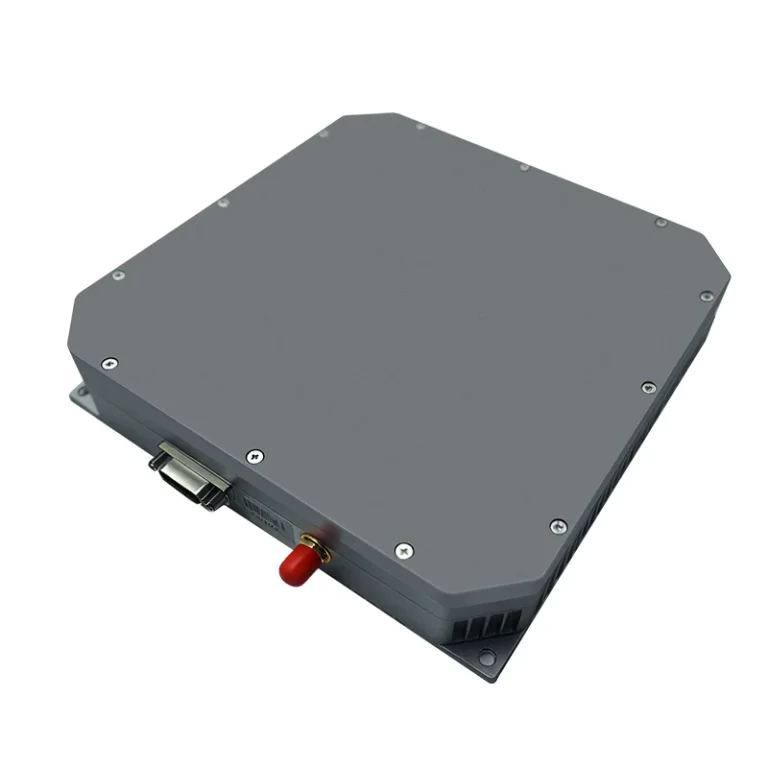
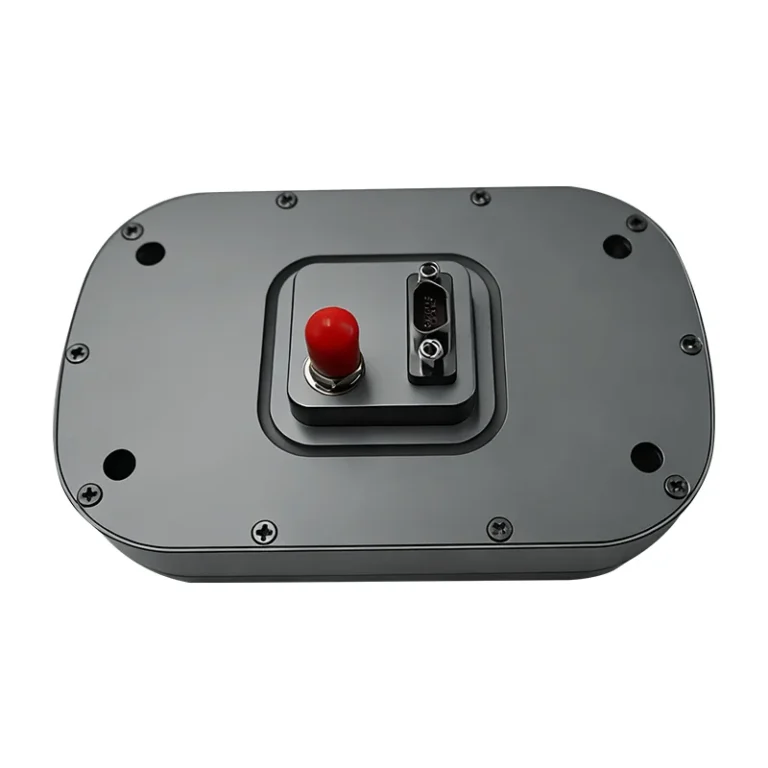
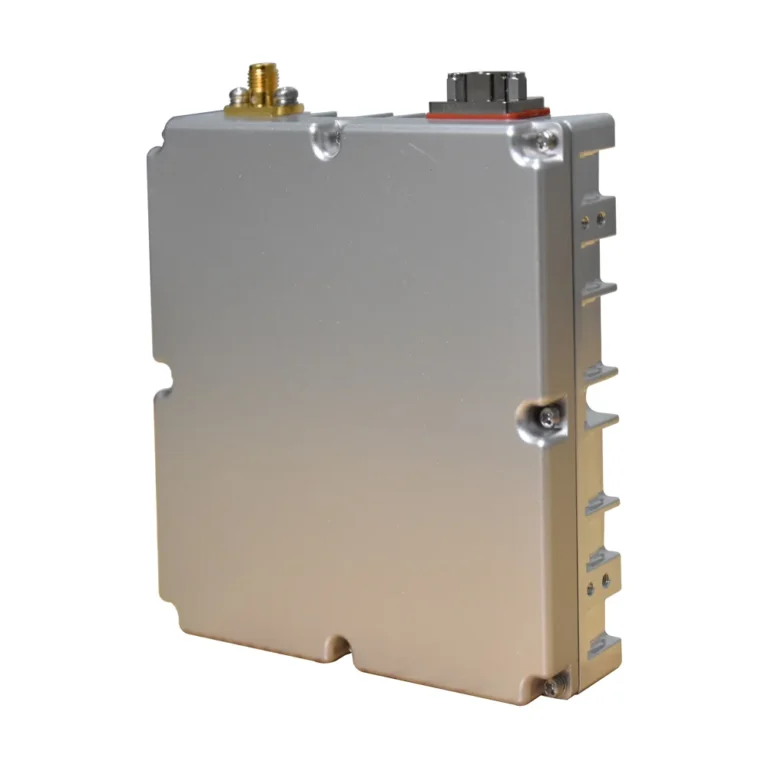
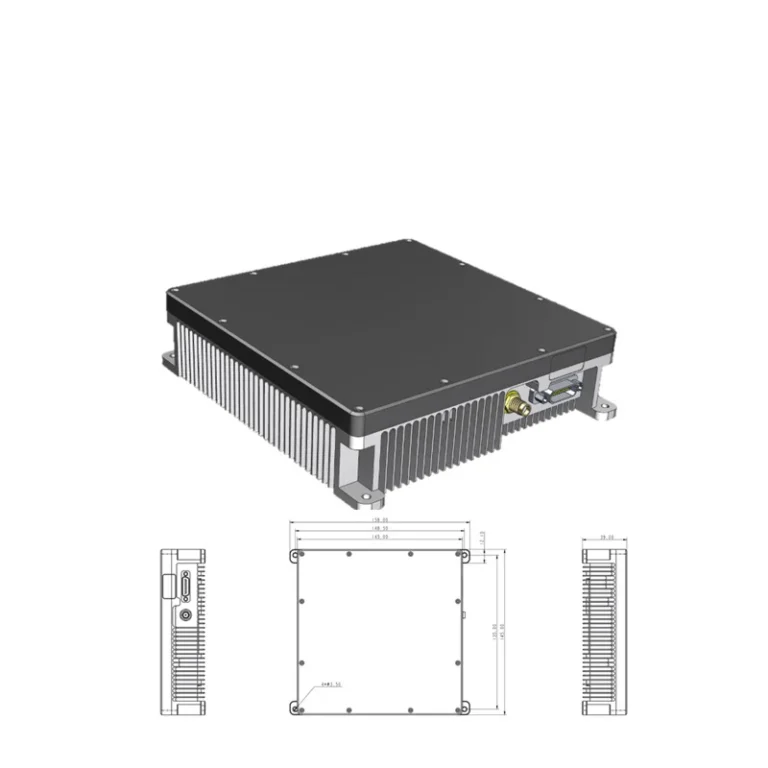
When a spray drone loses its RTK fix halfway through a field, the operator may have to wait for positioning to recover and then identify the last completed pass. If the interruption consistently occurs along the edge of an orchard, tree cover may be the cause. If it happens in fields with poor cellular coverage, the RTK correction link may be dropping out. A controlled reception pattern antenna (CRPA) is worth considering when radio-frequency interference is disrupting satellite reception.
For most agricultural drones operating reliably in open fields, a CRPA is difficult to justify as standard equipment. The economics are different for a spraying contractor that repeatedly loses working time in areas with confirmed GNSS interference. In that case, the decision depends on two questions: can the antenna preserve RTK performance on the aircraft in question, and how much downtime or rework would it actually prevent?
Why Can an Agricultural Drone Lose Its RTK Fix?
Agricultural drones use real-time kinematic (RTK) positioning to maintain spacing between spray passes, resume work after a battery change or tank refill, and follow previously mapped field boundaries. Accurate RTK positioning requires both continuous satellite observations at the aircraft and timely correction data from a reference station or network. If either deteriorates, the receiver may fall back from an RTK fixed solution to a less accurate float solution.
The DJI AGRAS T50 illustrates what RTK contributes at the aircraft level. It supports multi-frequency, multi-constellation RTK and can receive corrections from a local mobile station or a network RTK service. Under strong GNSS reception, DJI specifies a horizontal hovering accuracy of ±10 cm with RTK enabled, compared with ±60 cm with RTK disabled. These figures describe aircraft hovering performance. Receiver positioning accuracy and the accuracy of spray deposition are separate measurements. An antenna upgrade therefore needs to be assessed against the operational problem the grower or contractor wants to solve.
Heading is another consideration. Some agricultural drones use two GNSS antennas to determine heading, reducing their dependence on a magnetic compass near sources of magnetic disturbance. A compass warning, a network RTK disconnection, and interference affecting GNSS reception point to different parts of the system. Each calls for a different response.
Diagnosing RTK Interruptions in the Field
| What the operator observes | Likely causes to investigate | Appropriate response |
|---|---|---|
| Network RTK disconnects in areas with weak cellular coverage. The controller also reports a network issue, and service returns when coverage improves. | The aircraft is no longer receiving timely corrections because the cellular connection or correction service has dropped out. | Check network coverage, service status, and the age of the last correction. For fields with persistently poor coverage, consider a local base station supported by the aircraft. An onboard CRPA cannot restore missing correction data. |
| Positioning deteriorates near tall trees, trellises, or buildings and improves in open areas. | Obstructed satellite visibility or multipath, where reflected signals reach the receiver along indirect paths. | Check the base station’s view of the sky and review the affected section of the flight plan. A CRPA cannot recover a direct satellite signal that the terrain or canopy physically blocks. |
| Satellite reception repeatedly degrades in an open field while the RTK correction service remains available. | GNSS-band radio-frequency interference is one possibility. A fault in the aircraft’s receiving equipment can produce similar symptoms. | Compare logs from several operations and have the aircraft manufacturer or service provider review the evidence. A CRPA becomes a candidate once recurring radio-frequency interference has been confirmed. |
For a contractor working in remote areas, a local base station may address more interruptions per season than an antenna upgrade. A smaller operator could have a stronger business case for a CRPA if one regularly serviced field has confirmed interference and delays there repeatedly result in missed application windows.
What Can a CRPA Improve During Spraying and Spreading?
A CRPA uses an array of antenna elements to reduce the receiver’s sensitivity to interfering signals arriving from certain directions. For a spraying or spreading operation, the practical benefit is the possibility of maintaining usable positioning through a part of the field where work previously had to stop. The value can be measured in fewer interruptions, less time waiting for the fix to return, and fewer occasions when the operator has to identify where to resume a pass.
For an RTK-equipped aircraft, the most important question for a supplier is whether the antenna and the intended receiver can maintain both an RTK fix and the required flight-path accuracy. RTK relies on precise carrier-phase measurements. Research published by the Institute of Navigation shows that spatial filtering in an antenna array can introduce phase shifts that affect high-precision positioning. The researchers also demonstrated that suitable compensation can reduce this effect. A quoted interference-suppression figure in decibels, on its own, tells an operator little about the accuracy the aircraft will achieve along a spray line.
For an existing aircraft, the first step is to confirm that the manufacturer supports the configuration, including continued operation of the original heading system and access to after-sales support. An agricultural drone manufacturer evaluating a new design can compare four measures across comparable field operations: the percentage of operating time with an RTK fixed solution, the time required to regain a fix, the cross-track deviation on repeated passes, and the minutes of work lost to positioning interruptions per unit of area treated. The last measure connects engineering performance directly to operating cost.
The Cost Case for Growers and Spraying Contractors
Agricultural spraying is commonly priced by area, so the return on an antenna upgrade depends on both the aircraft’s workload and the local service rate. A 2025 public procurement document for aerial crop protection in Huaxian County, Henan, China, listed a unit price of CNY 3.98 per mu, equivalent to CNY 59.70 per hectare, across several lots. This is a project-specific figure, but it illustrates the narrow margin for additional equipment costs in some contracts. If a delayed field can still be completed that afternoon, the recoverable loss may consist only of crew time or extra travel. If the application window closes and the job is lost, the relevant figure is the margin the contractor would have earned.
Consider an illustrative budget. Assume a manufacturer-supported upgrade costs CNY 12,000 for equipment, integration, and validation. With a service life of three operating seasons and CNY 500 in additional maintenance per season, the upgrade must recover CNY 4,500 per season to break even. These assumptions are for calculation purposes. An actual purchase decision requires a quotation for the specific aircraft configuration.
| Area treated per aircraft per season | Additional cost to recover per hectare treated |
|---|---|
| 333 hectares (5,000 mu) | CNY 13.50 |
| 1,000 hectares (15,000 mu) | CNY 4.50 |
| 2,000 hectares (30,000 mu) | CNY 2.25 |
Seasonal area is cumulative. Treating the same 100-hectare field three times counts as 300 hectares treated.
The more revealing figure is the area where the upgrade can actually prevent losses. Suppose one aircraft treats 1,000 hectares per season, but only 100 hectares are in locations with confirmed interference. The upgrade then has to prevent CNY 45 in losses per affected hectare to recover its seasonal cost. A few short waits are unlikely to justify that expense. Repeated return trips, the need to dispatch a replacement aircraft, or jobs lost during short application windows can change the calculation. For a multi-aircraft contractor, equipping one aircraft for those fields may make more financial sense than upgrading the entire fleet.
Which Agricultural Operations Are the Best Fit?
For an individual grower or contractor whose aircraft consistently maintains an RTK fix over open farmland, the stronger investment is usually a reliable correction service and good records of any interruptions. In orchards and hilly terrain, diagnosing canopy obstruction and multipath deserves particular attention. High crop value increases the cost of a missed application, but it does not establish that an anti-jamming antenna will solve the underlying positioning problem.
The strongest candidates are professional operators who regularly serve fields with documented GNSS interference, and aircraft manufacturers developing an option for those customers. A season of records showing where fixes were lost, how long recovery took, and which jobs required a return visit provides a sound basis for the decision. If a manufacturer-supported CRPA configuration preserves the required RTK accuracy and the losses it can realistically prevent exceed its seasonal cost, the upgrade has a clear agricultural purpose: completing more scheduled work within the available application window.