Applications of CRPA Antennas in Communication Base Stations

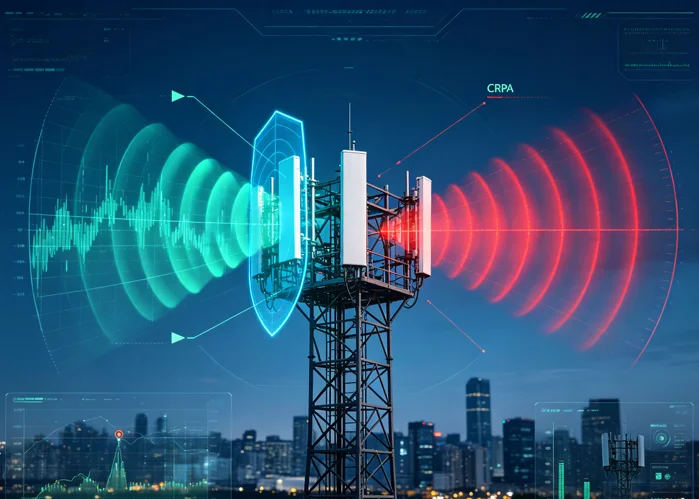
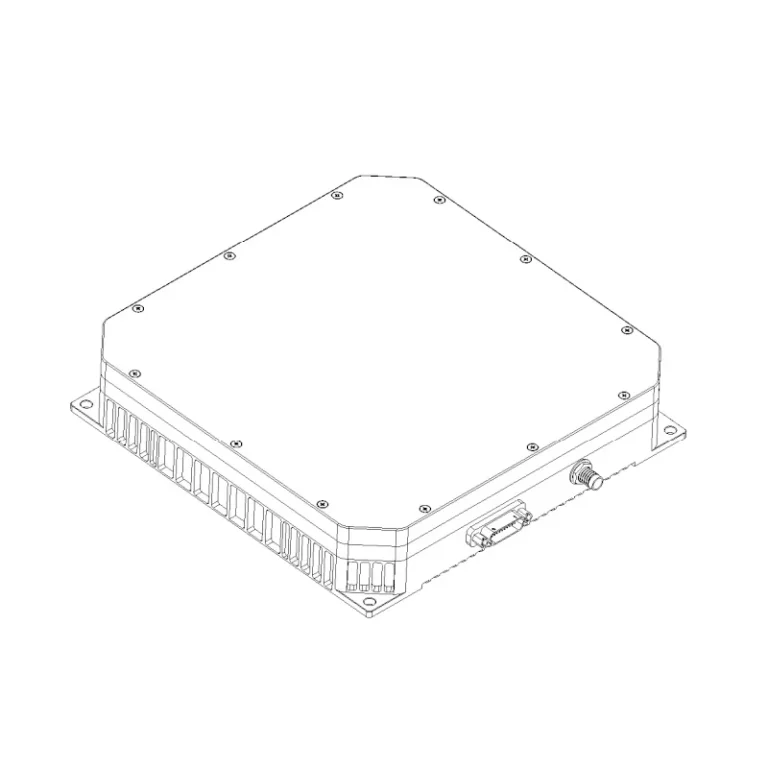
CRPA technology uses multi-element antenna arrays and adaptive beamforming algorithms to actively shape the antenna’s reception pattern, creating deep notches in the direction of interference while maintaining effective reception of signals from satellites at the zenith.

Communication Base Stations’ Reliance on GNSS and the Challenges They Face

Modern communication networks, particularly 4G/5G mobile communication systems, have a critical need for high-precision time synchronization. Clock synchronization between base stations, network management, frequency calibration, and location-based services (LBS) all rely heavily on the precise timing and positioning information provided by GNSS (Global Navigation Satellite Systems, including GPS, BeiDou, GLONASS, Galileo, etc.). GNSS signals have become a key pillar supporting the normal operation of communication infrastructure.

However, GNSS satellite signals are extremely weak when they reach the ground and are highly susceptible to various types of interference:

Intentional Interference: In the vicinity of base stations, malicious actors may use portable GNSS jammers, causing widespread signal loss.

Unintentional Interference: As the sub-6GHz frequency band becomes increasingly congested and electrical and electronic equipment is widely deployed around base stations, the electromagnetic environment is growing increasingly complex, posing a serious threat to the accuracy and reliability of GNSS signals.

Multipath Effects: Base stations are typically deployed in areas with dense urban buildings or complex terrain. GNSS signals reach the antenna after being reflected by buildings, the ground, and other surfaces, resulting in multipath errors that affect timing and positioning accuracy.

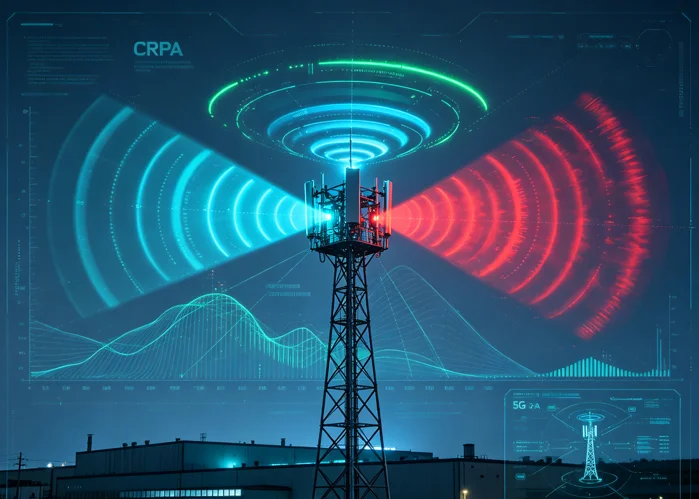
CRPA uses multi-element antennas, RF channels, and digital signal processing algorithms to perform spatial analysis and adaptive weighting of signals arriving from different directions, thereby creating a null steering effect in the direction of the interference while maintaining the ability to receive valid GNSS satellite signals as much as possible. CRPA can suppress interference signals from specific directions by dynamically adjusting the reception pattern.

Challenges Facing Traditional GNSS Base Station Antennas

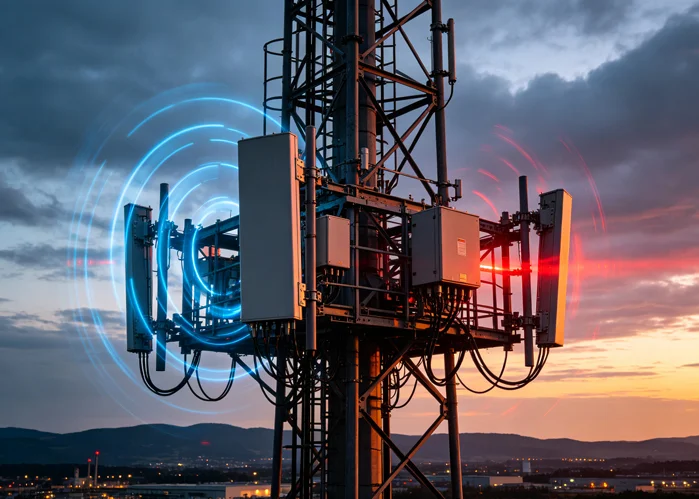
Traditional communication base stations typically install GNSS antennas at the top of towers, on the roofs of equipment rooms, or at other elevated locations, connecting them to GNSS receivers or synchronization devices via feedlines. While this solution is simple and cost-effective, it may face the following issues in complex electromagnetic environments.

Radio Frequency Interference
There are numerous wireless communication devices in the vicinity of base stations, including:

  • 4G/5G wireless devices;
  • microwave communication systems;
  • broadcasting systems;
  • wireless local area networks (WLANs);
  • industrial wireless devices;
  • and other high-power RF devices.

If interference signals enter the front end of the GNSS receiver, they may cause a decrease in reception sensitivity or even result in abnormal satellite signal tracking.

Applications of CRPA Antennas in Communication Base Stations

Co-channel or Adjacent-channel Interference

GNSS operates across multiple frequency bands, including the different frequencies used by systems such as GPS, Galileo, BeiDou, and GLONASS.

When strong radio frequency signals are present in the vicinity, even if the interfering signal is not exactly on the same frequency as the GNSS signal, GNSS signal reception may still be affected by issues such as the receiver front-end dynamic range and filter nonlinearity.

Directional Interference

Conventional antennas cannot spatially discriminate based on the location of the interference source.

For example, a strong interference source may arrive from a certain direction relative to the base station, while GNSS satellite signals come from different directions in the sky. It is difficult for traditional antennas to actively distinguish between the two in the spatial domain.

This is precisely where the CRPA’s advantages come into play.

Applications of CRPA Antennas in Communication Base Stations

Contact Our Experts to Find the Perfect CRPA Antenna for Your Application

Applications of CRPA Antennas in Communication Base Stations

Key Applications of CRPA in Communication Base Stations

Suppression of Multipath Effects:
Buildings and metal structures surrounding base stations act as strong reflectors. CRPA can identify and suppress reflected signals from non-zenith directions, ensuring that direct satellite signals are received first, thereby improving timing accuracy.

Countering Spoofing Attacks:
In addition to suppressing interference, CRPA can also effectively counter more covert spoofing attacks—where attackers transmit false GNSS signals to induce erroneous timing outputs in receivers, which could cause a time reference offset across the entire base station network.

Countering In-Band Interference:
It can simultaneously achieve deep notching against up to three or more interference sources within each frequency band. For example, a typical 7-element CRPA has a theoretical maximum directivity of 14.5 dB and can simultaneously suppress up to six interference sources.

Suppression of Out-of-Band Interference:
Through filtering technology, it provides up to 80 dB of suppression against out-of-band interference from other communication systems.

Adaptive Adjustment:
The core CRPA system features adaptive adjustment capabilities, which not only suppress interference signals but also ensure the complete reception of navigation signals.

Request A Quote

If you have any order needs or questions about the product, please contact us. Your personal information will be kept strictly confidential.