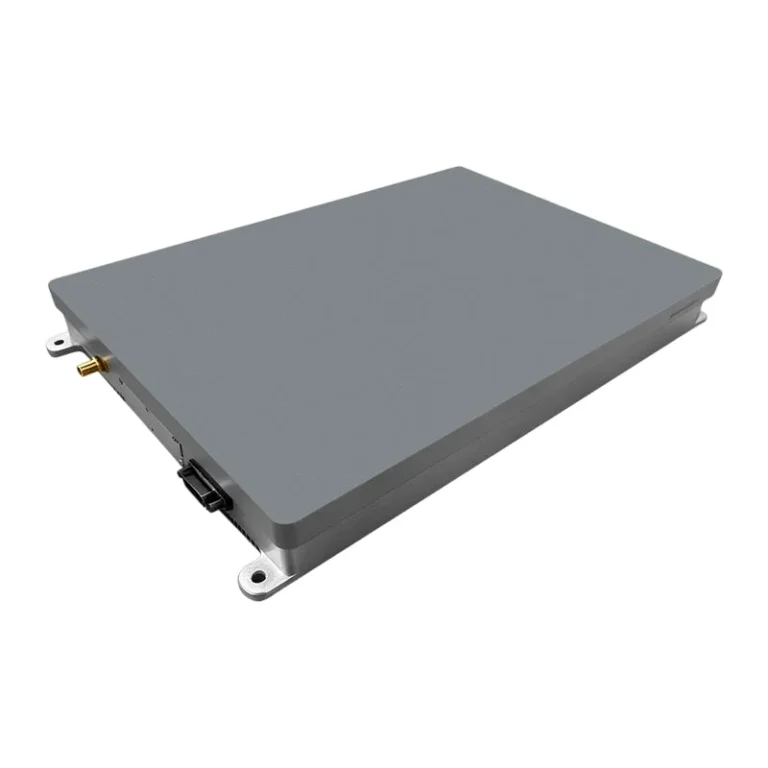
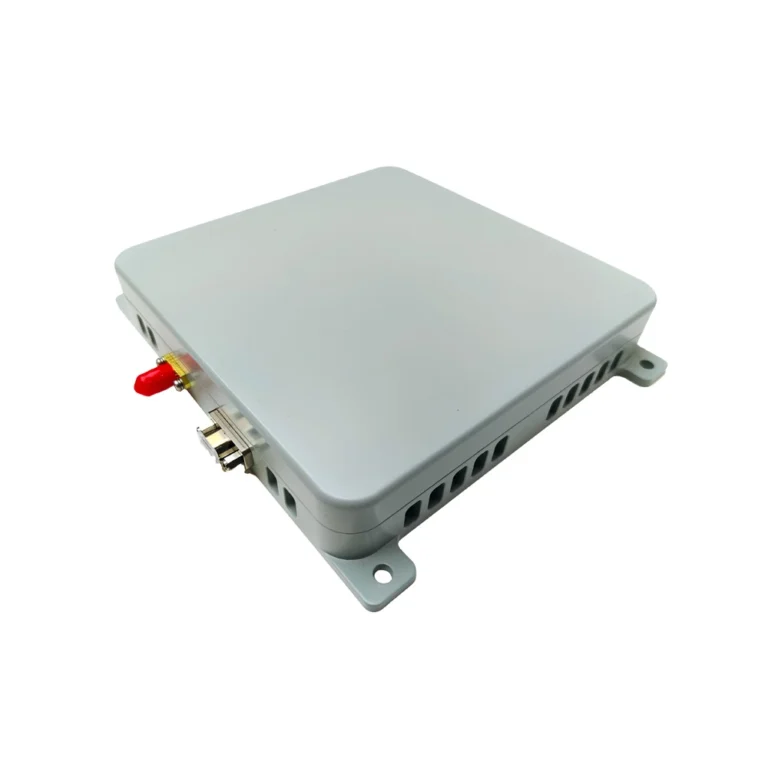
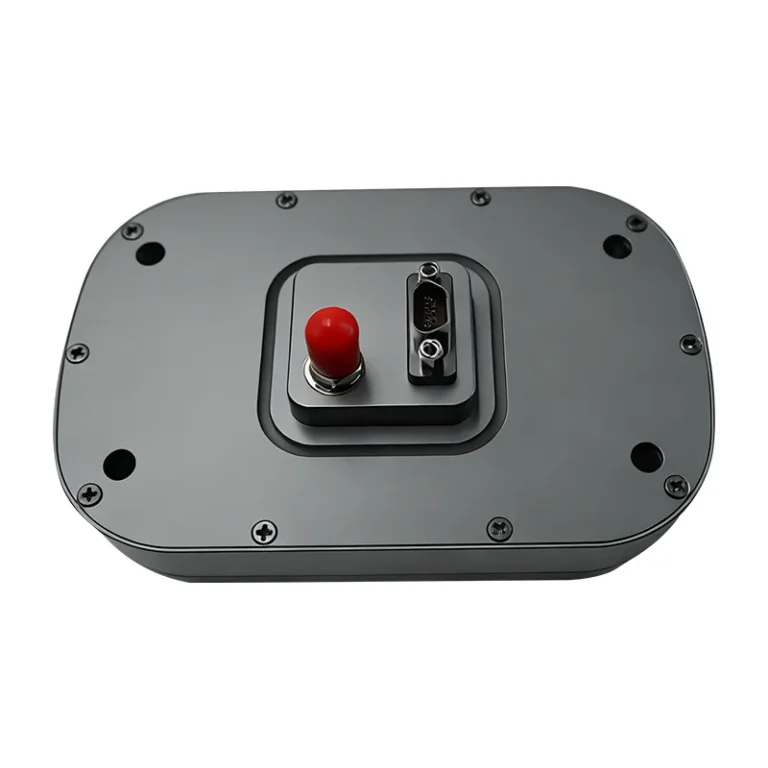
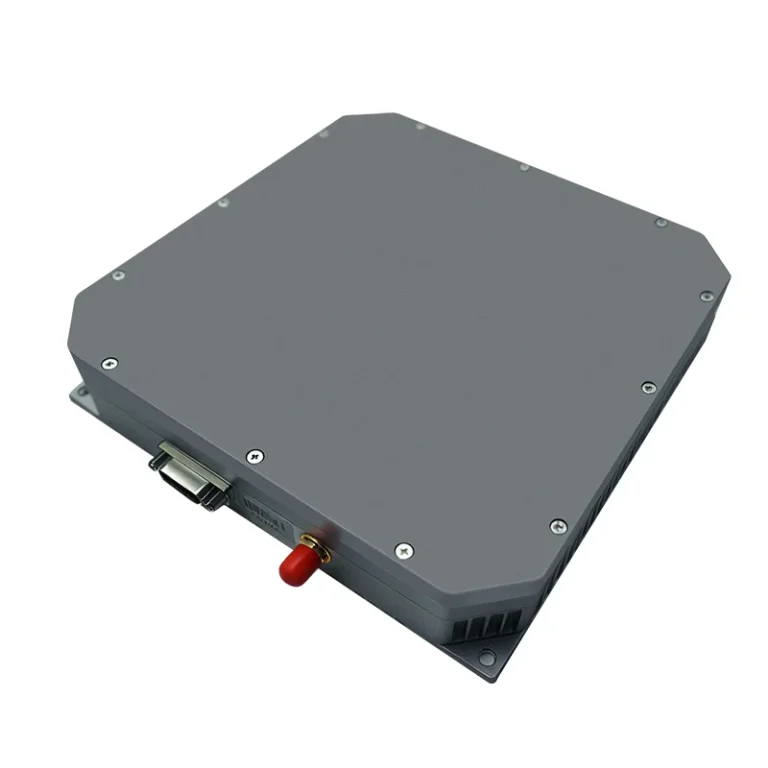
Controlled Reception Pattern Antenna (CRPA) technology is widely recognized as one of the most effective solutions available today for mitigating GNSS jamming and spoofing threats. A CRPA system consists of multiple antenna elements integrated with a dedicated anti-jamming signal processor, forming an intelligent antenna array capable of distinguishing authentic satellite signals from interference and deception.
The key advantage of CRPA lies in its ability to use the spatial characteristics of incoming signals to differentiate between legitimate and malicious transmissions. Its operation is primarily based on two critical mechanisms:
Anti-Jamming Capability
Spatial Filtering and Directional Null Steering
When confronted with intentional jamming signals, a CRPA functions as an intelligent spatial filter. It suppresses interference by creating deep nulls in the direction from which the jamming signals originate.
The CRPA processor continuously analyzes the surrounding RF environment, identifies the strongest interference sources, and dynamically adjusts the phase and amplitude of the signals received by each antenna element. Through sophisticated beamforming algorithms, the system generates a composite antenna radiation pattern that effectively “ignores” the direction of the jammer while maintaining—or even enhancing—reception of legitimate GNSS signals from satellites overhead.
This technology enables CRPA systems to simultaneously mitigate multiple jamming sources arriving from different directions.
Anti-Spoofing Capability
Direction-of-Arrival (DOA) Analysis
To detect GNSS spoofing attacks, CRPA systems primarily rely on Direction-of-Arrival (DOA) analysis.
Authentic GNSS satellite signals originate from multiple locations across the sky, each with a unique azimuth and elevation angle. In contrast, most spoofing systems transmit all counterfeit satellite signals from a single antenna or a limited number of ground-based transmitters located in a fixed direction.
By accurately measuring the arrival direction of each received signal, a CRPA can identify anomalies. If multiple signals claiming to be from different satellites are detected arriving from the same narrow angular sector, the system can immediately classify them as spoofed signals, flag them as threats, and continue tracking genuine satellite signals arriving from legitimate directions.
In addition, many CRPA systems employ advanced beamforming techniques to increase gain toward desired satellites, further improving signal quality and positioning performance. More sophisticated solutions may also incorporate technologies such as Space-Time Adaptive Processing (STAP) to counter increasingly complex interference and spoofing scenarios.
Is Anti-Spoofing Capability Necessary?
The anti-spoofing function of a CRPA is an advanced, optional capability whose necessity depends entirely on the application’s operational environment and risk tolerance.
Choosing a CRPA with anti-spoofing functionality should be based on a comprehensive assessment of threat exposure, operational requirements, and cost-benefit considerations.
Applications Where Anti-Spoofing Is Highly Recommended—or Essential
Military and Government Critical Infrastructure
Military platforms, defense systems, government facilities, energy infrastructure, and financial networks are all potential targets for sophisticated GNSS attacks. The consequences of a successful spoofing attack can be severe, making anti-spoofing capability a standard requirement for these mission-critical applications.
High-Value Commercial and Industrial Operations
Applications such as drone delivery networks, autonomous trucking, precision agriculture, and port automation rely heavily on accurate positioning. A successful spoofing attack could result in vehicle misrouting, cargo loss, operational disruption, or even catastrophic accidents. For these environments, anti-spoofing protection provides an important layer of operational security.
Regulated and Compliance-Driven Industries
Industries such as aviation, maritime transportation, power distribution, and telecommunications often operate under stringent regulatory frameworks. In many cases, industry standards and security requirements call for advanced GNSS resilience measures. CRPA anti-spoofing capability can play a crucial role in meeting these compliance objectives.
Operations in Known High-Risk Areas
Equipment deployed near airports, military installations, disputed maritime regions, or other areas with documented GNSS interference activity faces elevated spoofing risks. In such environments, anti-spoofing-enabled CRPA systems are often essential for maintaining operational reliability and mission success.
For these applications, anti-spoofing protection is just as important as anti-jamming capability, together forming a comprehensive GNSS defense strategy.
Applications Where Anti-Spoofing May Not Be Necessary
Consumer Electronics
Smartphones, vehicle navigation systems, fitness trackers, and similar consumer devices are generally more susceptible to signal blockage and ordinary interference than sophisticated spoofing attacks. The additional cost, complexity, and power consumption associated with anti-spoofing functionality may not be justified.
Low-Value or Recreational Applications
Basic asset trackers, recreational GPS receivers, and other non-critical positioning devices typically have limited exposure to targeted attacks. Even if positioning performance is affected, the consequences are generally manageable.
Controlled or Closed-Environment Operations
Applications such as Automated Guided Vehicles (AGVs) operating on fixed routes often rely on multiple complementary sensors—including LiDAR, magnetic markers, vision systems, or inertial navigation—to validate positioning data. Because GNSS is only one component of the navigation solution, dedicated anti-spoofing protection may be less critical.
Conclusion
Anti-spoofing capability is not universally required for every CRPA deployment. For high-risk, safety-critical, or mission-critical operations, it is often an essential investment that significantly enhances resilience against increasingly sophisticated GNSS threats. For lower-risk applications, however, anti-spoofing functionality may be considered an added benefit rather than a necessity.
SafeGNSS offers selected CRPA antenna solutions with optional anti-spoofing capability. If you would like to evaluate whether anti-spoofing protection is appropriate for your application, please contact our team for expert guidance and product recommendations.