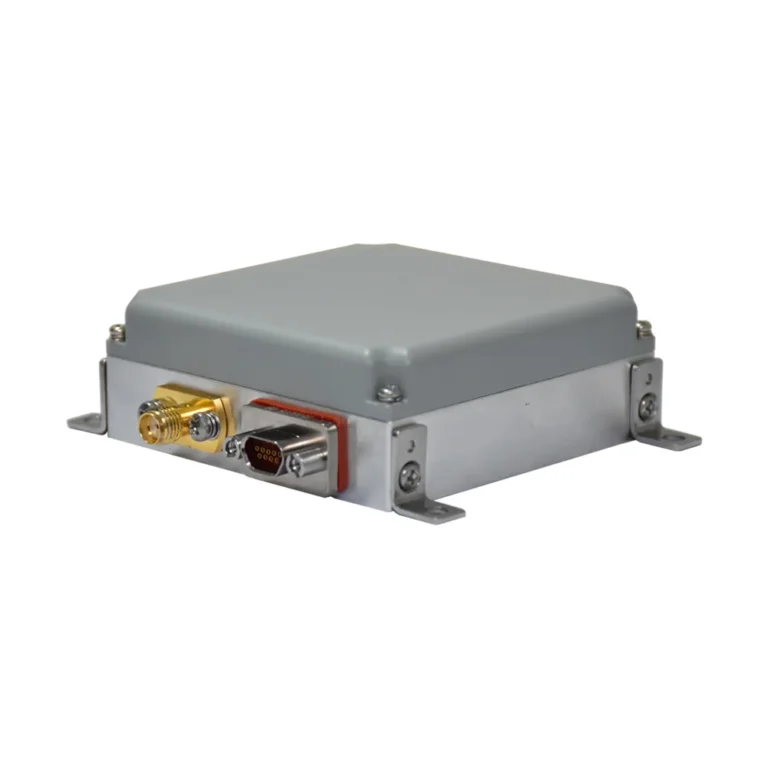
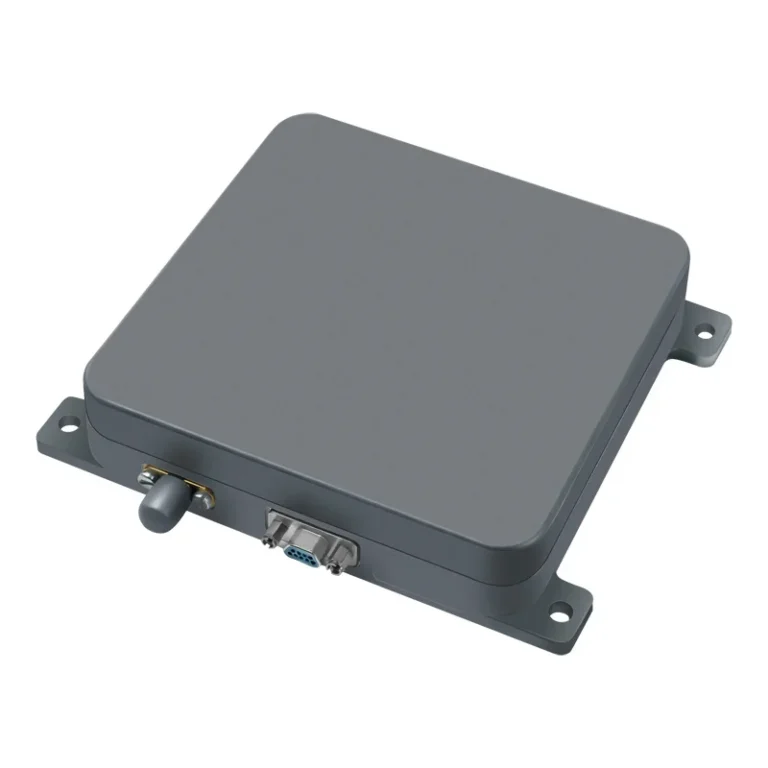
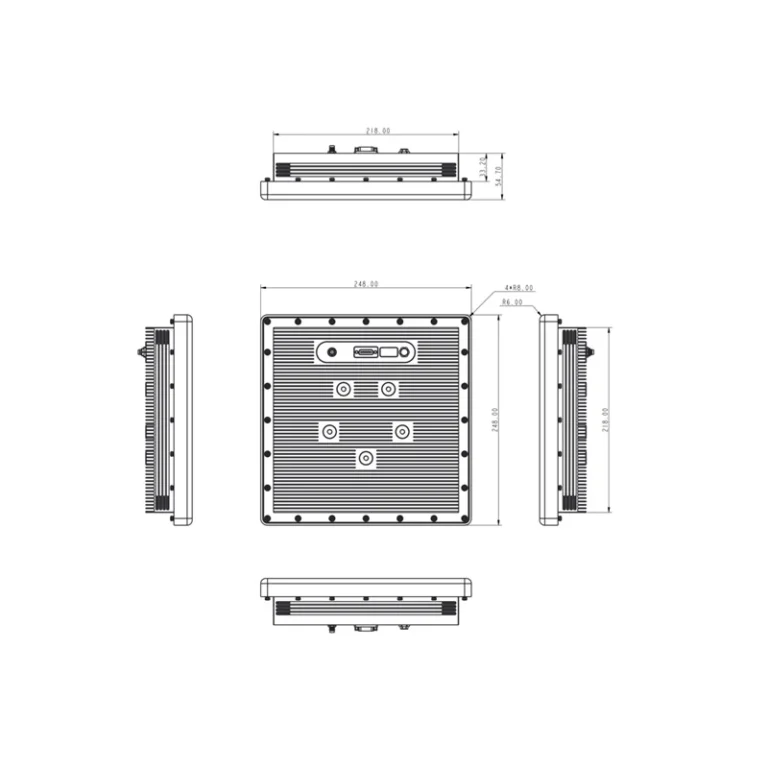
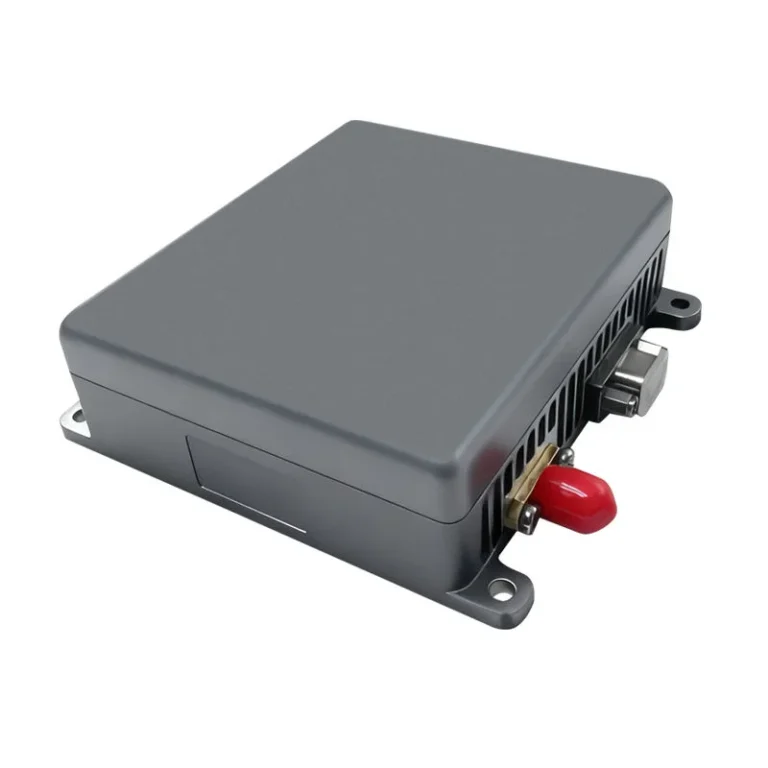
CRPA antennas ranging from 2-element to 32-element configurations, as well as the less common array configurations in between. The key to understanding them lies in a core principle: a CRPA antenna with N elements can theoretically counter up to N-1 interference sources simultaneously. This is akin to a team: the more members there are, the more tasks they can handle at once. Similarly, the greater the number of elements in an array, the stronger its anti-interference capability—but this also leads to corresponding increases in size, power consumption, and cost.
I. 2-Element: The Ultimate Lightweight and Basic Anti-Interference Solution
The 2-element configuration is the smallest and lowest-power practical configuration in CRPA. It can only form a single anti-interference null, capable of countering a maximum of one interference source simultaneously, with a typical signal-to-interference ratio (SIR) of approximately 20 dB. The power consumption of such products can be as low as 60 mA, and they typically weigh only a few dozen grams.
Typical Application Scenarios
Primarily targeted at individual soldier equipment with extreme requirements for size and power consumption, such as handheld anti-jamming navigation terminals, backpack-mounted reconnaissance equipment, and body-worn cameras. There are also a few applications on some micro-drones or loitering munitions, provided that the platform is extremely weight-sensitive and the anticipated jamming threats are relatively simple.
Market Positioning
These products are positioned in the entry-level or specialized application market, offering relatively low prices but holding a small market share. They are typically adopted in scenarios where “basic anti-jamming capability is essential, but there is simply no room for a larger antenna.”
II. 4-Element: Compact Workhorse, Best Value Option
The 4-element CRPA antenna configuration is the most common entry-level multi-element setup, capable of simultaneously countering up to three interference sources with a signal-to-interference ratio (SIR) of over 40 dB. The product typically measures 10–15 cm square, weighs approximately 0.5 kg, and has moderate power consumption.
Typical Application Scenarios
Widely used in various platforms where size is a constraint but interference countermeasures are essential: small industrial-grade drones, police vehicles, critical infrastructure (such as power grid substations, communication base stations, and airport ground equipment), and certain commercial vessels. It is also employed in some low-cost precision-guided munitions.
Market Positioning
A mainstream anti-jamming solution offering high value for money. It holds a significant market share in both civilian and quasi-military sectors and is the first choice for many users upgrading from “non-anti-jamming” to “anti-jamming” systems. It offers moderate pricing and high technical maturity.
III. 6-Element: A Transition Solution Between Mainstream and Enhanced
6-element systems are relatively rare in the market but do exist. They can simultaneously counter up to five jamming sources, offering better performance than 4-element systems but are not as widespread as 8-element systems. 6-element arrays typically employ specialized geometric layouts (such as hexagonal arrangements) to achieve better spatial resolution than 4-element arrays within a limited aperture.
Typical Application Scenarios
Primarily used in situations where there is a need for some performance improvement, but the platform size cannot accommodate a standard 8-element antenna. Examples include certain medium-sized UAVs, vehicle-mounted command and communication systems, and retrofitted legacy platforms (where the space reserved in the original design can only accommodate a 6-element array). They are also found in portable equipment used for special operations.
Market Positioning
This represents a complementary solution within a niche market. Unlike 4-element and 8-element antennas, which have become mass-produced standardized products, 6-element antennas are primarily offered as custom or semi-custom solutions tailored to specific requirements. Their price falls between that of 4-element and 8-element antennas, but they hold a smaller market share.
IV. 7-Element Array: A Classic High-Performance Military Configuration
The 7-element array is a highly classic and mature military configuration, typically featuring a layout with one central element and six peripheral elements. It can simultaneously counter up to six jamming sources and offers stable and reliable performance. Before the maturation of digital beamforming algorithms, the 7-element array was the mainstream configuration for high-end CRPA systems.
Typical Applications
Widely used in high-performance military aircraft (fighters, transport aircraft, early warning aircraft), armed helicopters, and the superstructures of large naval vessels. It can also be found in some early precision-guided weapon systems. The 7-element configuration has a long-standing history in the military market, and many CRPA systems in active service utilize this configuration.
Market Positioning
This product falls into the mid-to-high-end segment of the traditional military market. Although it has been gradually replaced by 8-element configurations in recent years, the large number of active-duty systems ensures a steady demand for 7-element units in the maintenance, upgrade, and replacement markets. Due to its higher price point, it is primarily targeted at military customers.
V. 8-Element: The Current Mainstream High-Performance Solution
The 8-element CRPA configuration is currently the most popular and rapidly evolving solution, capable of simultaneously countering up to seven jamming sources. Its signal-to-noise ratio (SNR) can exceed 50 dB, with some high-performance models reaching over 110 dB. A key advancement lies in advanced integrated design, which has made 8-element products extremely compact—measuring as small as 9 cm square, weighing less than 300 grams, and consuming less than 13 watts of power. This allows small platforms that previously could only accommodate 4-element arrays to now utilize 8-element arrays.
Typical Application Scenarios
Extremely broad coverage: From small drones, loitering munitions, and soldier-portable devices to main battle tanks, armored vehicles, missiles, fighter jets, and naval vessels, virtually all platforms with explicit requirements for navigation and anti-jamming capabilities are migrating to 8-element arrays. It is currently the undisputed mainstay of the military and high-end industrial anti-jamming market.
Market Positioning
It belongs to the high-performance mainstream market and is currently the “star configuration” among CRPA products. It achieves the optimal balance between performance, size, power consumption, and cost, resulting in the fastest-growing market share. Priced higher than 4-element antennas but lower than 16/32-element antennas, it offers outstanding value for money. Nearly all major anti-jamming antenna manufacturers are prioritizing the promotion of 8-element products.
VI. 11-Element and 12-Element Configurations: High-End Customized Enhancement Solutions
The 11-element and 12-element configurations represent high-end solutions capable of simultaneously countering 10 to 11 interference sources. They are less common on the market than the 8-element configuration, primarily because the 8-element configuration provides sufficient anti-interference capability for the vast majority of applications, while the size and cost of the 11- and 12-element configurations increase significantly.
Typical Application Scenarios
These solutions are primarily intended for top-tier platforms operating in extremely complex electromagnetic environments where high-intensity interference from multiple directions is anticipated. Examples include strategic reconnaissance aircraft, high-altitude long-endurance UAVs, large electronic warfare aircraft, and naval flagship vessels. They are also used in fixed anti-jamming systems at certain ground-based strategic facilities, such as missile silos and command centers.
Market Positioning
This falls within the high-end, customized market segment, characterized by low production volumes and high unit costs. Typically, the military places direct custom orders with manufacturers rather than purchasing standardized off-the-shelf products. Users prioritize “redundancy” and “extreme performance capabilities,” with cost and size being secondary considerations.
VII. 16-Element: The Protection Choice for Strategic-Level Platforms
The 16-element CRPA system is one of the top-tier solutions, capable of simultaneously countering up to 15 interference sources with a signal-to-interference ratio exceeding 75 dB. However, the trade-offs are significant: the diameter typically exceeds 370 mm, the weight exceeds 7 kg, and power consumption is around 50 watts. This makes it unsuitable for small and medium-sized platforms.
Typical Application Scenarios
Primarily installed on strategic bombers, airborne early warning aircraft, large unmanned reconnaissance aircraft, aircraft carriers, amphibious assault ships, and ground-based strategic command centers. These platforms have a high tolerance for size and weight but demand the utmost reliability in navigation signal security.
Market Positioning
This product targets the high-end strategic market. Primary customers are the armed forces of major powers; while procurement volumes are modest, the value per unit is extremely high. Such products are typically not sold individually but are delivered as core components of complete navigation anti-jamming systems.
VIII. 32-Element Array: Testing Extreme Performance and Strategic Applications
The 32-element array represents the current ceiling for practical CRPA systems, capable of simultaneously countering over 30 jamming sources with a signal-to-interference ratio exceeding 100 dB per direction. However, with dimensions exceeding 480 mm, a weight exceeding 12 kg, and power consumption of over 80 watts, it is no longer suitable for the vast majority of mobile platforms.
Typical Application Scenarios
Primarily deployed in fixed or semi-fixed ground-based strategic facilities, such as national-level navigation and combat command centers, critical communication hubs, and test ranges for electronic warfare countermeasure testing. It is occasionally installed on the tops of superstructures on some very large ships (such as aircraft carriers), but this is extremely rare.
Market Positioning
This product belongs to the top-tier strategic and scientific research markets. There are virtually no standardized products; they are primarily custom-built to order. The significance of this type of antenna lies more in “demonstrating technological capabilities” and “strategic deterrence” than in large-scale deployment.
Summary
From 2-element to 32-element systems, there is a clear logic of trade-offs:
- 2-element CRPA Antenna: Extremely compact, providing basic protection, designed for individual soldiers and micro-platforms.
- 4-element CRPA Antenna: The mainstay for value, designed for drones, vehicle-mounted systems, and infrastructure.
- 6-element CRPA Antenna: A transitional supplement, designed for specific upgrade needs.
- 7-element CRPA Antenna: Classic military configuration, designed for high-performance platforms currently in service.
- 8-element CRPA Antenna: Current market leader, balancing performance and size, with the widest range of applications.
- 11/12-element CRPA Antenna: High-end customization, designed for extremely complex environments.
- 16-element CRPA Antenna: Strategic-level protection, designed for large strategic platforms.
- 32-element CRPA Antenna: Extreme performance, designed for fixed installations and experimental applications.
In practical selection, the 8-element configuration has become the top choice for the vast majority of new development projects, while the 4-element and 7-element configurations still hold their respective market niches in terms of cost and compatibility with existing systems. The 2-element, 6-element, 11/12-element, 16-element, and 32-element configurations are primarily utilized in specific scenarios or for high-end requirements.