1. What is a CRPA?
A CRPA is a multi-element antenna system (typically 4-7 elements, or even more). It not only receives satellite signals but can also dynamically adjust the antenna’s radiation pattern (beam) through Digital Beamforming technology.
The fundamental difference from a single-element antenna (like a choke-ring or patch antenna) is: A CRPA possesses spatial processing capability, enabling it to perceive the direction of arrival of signals.
2. Core Principles of Anti-Spoofing/Anti-Deception
The core of a spoofing attack is to inject false signals, which resemble genuine satellite signals but carry erroneous information, into the receiver. CRPA defends against this through several key mechanisms:
a) Spatial Filtering and Null Steering
This is the core anti-spoofing function of a CRPA.
- Principle: Through real-time calculations, the CRPA can estimate the Direction of Arrival of all received signals (including genuine satellite signals and spoofing signals).
- Null Steering Operation: Once the system detects that signals from a specific direction or directions exhibit abnormal power levels or suspicious characteristics (e.g., not conforming to satellite orbital motion patterns), the digital beamforming processor can immediately form a deep “null” in the direction of the spoofing signal(s).
- Effect: This null means the antenna has very low (even negative) gain in that direction, thereby significantly suppressing (by 20-40 dB or more) the spoofing signals coming from that direction, while maintaining normal reception of genuine satellite signals.
- Advantage: Even if the spoofing signal is much more powerful than the genuine signal, as long as its spatial angle differs from that of the true signals, it can be effectively suppressed.
b) Beam Steering
- Principle: Conversely to “nulling,” a CRPA can actively steer a high-gain, narrow beam towards the known directions of genuine satellites (calculated based on ephemeris and its own approximate position).
- Effect: This acts like a spatial “spotlight,” preferentially receiving signals only from the expected directions. Spoofing signals arriving from other directions are naturally attenuated.
c) Spatial Consistency Checking
- Principle: Genuine satellite signals come from distant space; when they reach the ground, their wavefront is approximately planar. Furthermore, the angles of arrival for signals from different satellites conform to the known ephemeris and almanac. Spoofing signals are typically generated by one or a few ground-based transmitters, and their geometric relationships are completely different from those of the true satellite constellation.
- Detection: By measuring the phase differences of signals between its antenna elements, the CRPA can estimate the Angle of Arrival. The system continuously checks whether these angles match the expected ones (calculated based on rough position and satellite ephemeris). Any signal exhibiting spatial geometry inconsistent with expectations (e.g., all “satellite” signals appear to come from the same ground-based direction) is flagged as potentially spoofed.
d) Collaboration with Internal Receiver Algorithms
Modern anti-spoofing CRPA systems are deeply integrated with GNSS receivers, forming a holistic solution:
- Multi-Correlator Monitoring: The internal receiver monitors for abnormal correlation peaks (e.g., asymmetric power, early lock-on) using multiple correlators.
- Joint Decision-Making: Information from the receiver’s signal processing layer (anomalies in time/code/frequency domains) is fused with spatial domain anomalies (abnormal angles of arrival) detected by the CRPA antenna layer for information fusion and joint decision-making. This greatly enhances the reliability and robustness of detection. For instance, even if a spoofing signal arrives from a direction very close to a genuine satellite, subtle spatial differences and multi-correlator features can be jointly identified.
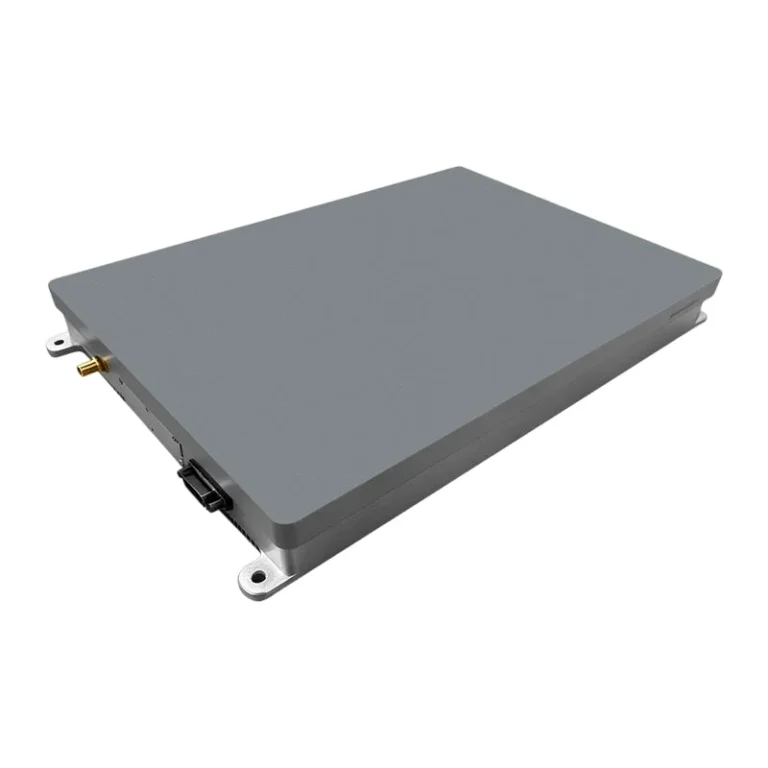
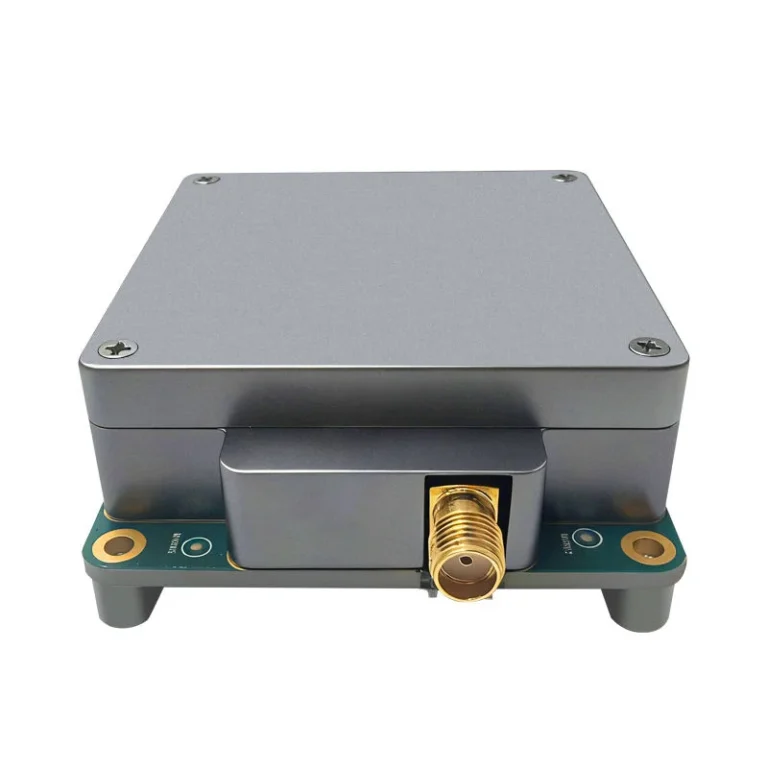
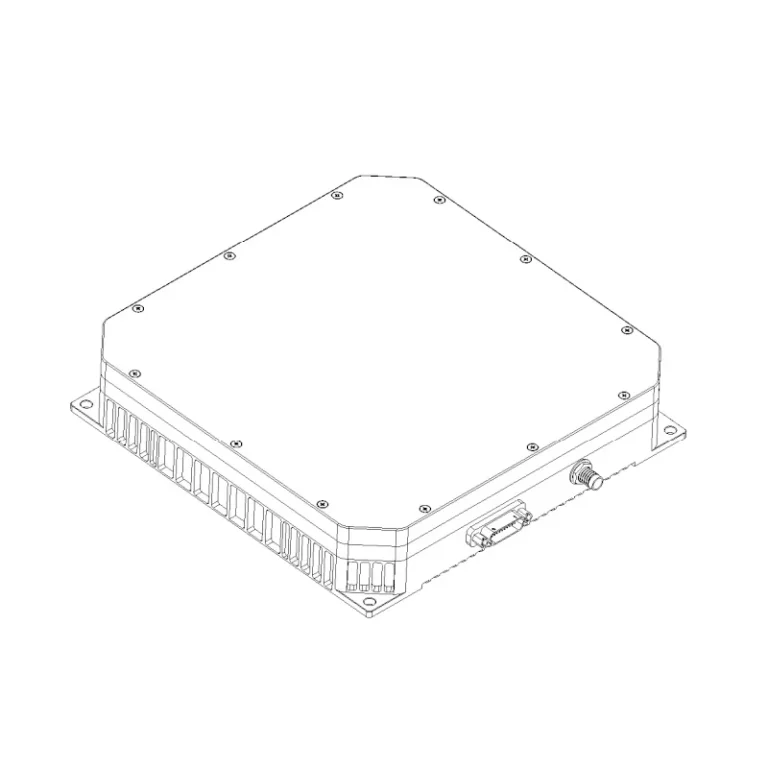
The video shows a test of the Dual-Frequency 4 Channel GNSS Anti-Jamming System (SGX-201) equipped with an anti-spoofing module. view SGX-201
3. Typical Architecture of an Anti-Spoofing CRPA System
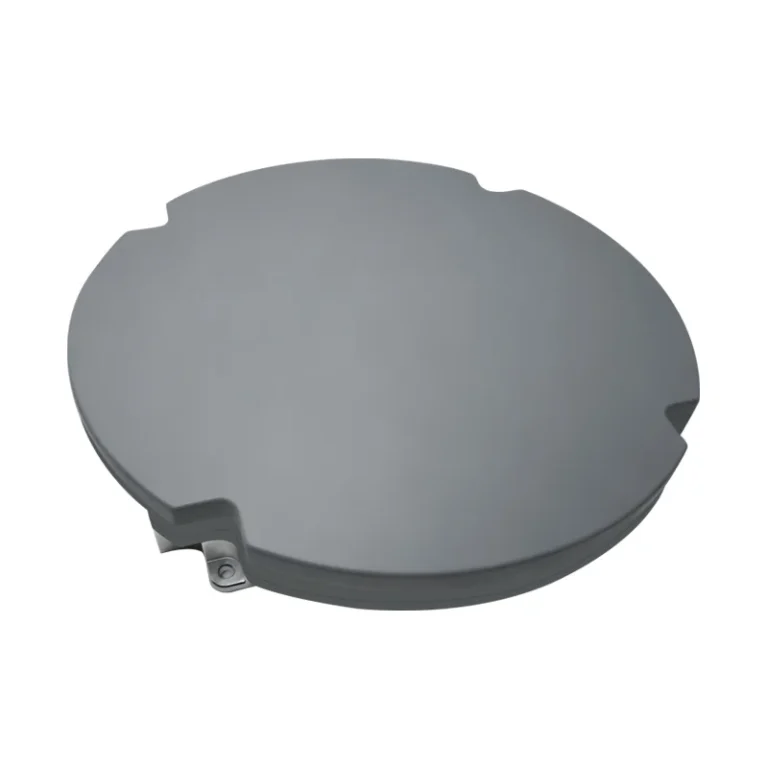
- Antenna Array: 4-7 elements arranged in a specific geometry (e.g., circular, cross-shaped) to ensure 360-degree spatial coverage.
- RF Front-End: Each antenna element has a dedicated RF channel to preserve signal phase information.
- Digital Beamforming Processor: The core hardware executing complex signal processing algorithms. It calculates weighting values in real-time to perform beamforming, null steering, and angle of arrival estimation.
- Anti-Spoofing Engine: Runs detection and mitigation algorithms, integrating spatial and temporal domain information to make decisions.
- Hardened GNSS Receiver: Works closely with the antenna processor to perform the final navigation solution.
4. Advantages and Limitations
Advantages:
- Powerful Suppression Capability: Excellent at suppressing strong spoofing signals arriving from unexpected directions.
- Active Defense: Can mitigate spoofing signals in real-time without interrupting positioning service.
- Difficult to Counter: Effectively spoofing an advanced CRPA system requires extremely sophisticated equipment (e.g., multi-antenna transmitters simulating different directions), making the cost and technical barriers very high.
Limitations/Challenges:
- Cost and Complexity: The system is expensive and has larger size, weight, and power consumption (SWaP), traditionally limiting its use to military and high-value platforms (aircraft, ships, reference stations).
- Vulnerability to “Co-directional” Spoofing: If a spoofer can precisely transmit spoofing signals from exactly the same direction as the genuine satellite (e.g., using a drone directly above the target or multiple transmitters precisely mimicking the satellite geometry), spatial filtering becomes ineffective. However, achieving such “advanced spoofing” is extremely difficult.
- High Calibration Requirements: The system requires precise calibration to ensure accurate beamforming and angle of arrival estimation.
- High Processing Power Requirements: Real-time processing of multi-channel data demands significant computational resources.
5. Application Areas
- Military: Ultimate GNSS protection for fighter jets, naval vessels, armored vehicles, and handheld devices for dismounted soldiers.
- Critical Infrastructure: Timing synchronization reference stations for power grids and communication networks.
- High-Value Civilian Platforms: Commercial airliners (especially those requiring aviation certification), autonomous vehicle test beds, high-end surveying equipment, financial transaction timestamp servers.
- Testing and Validation: Serves as the “gold standard” platform for verifying other anti-spoofing technologies.
Summary
By leveraging its unique spatial processing capabilities, the CRPA antenna provides powerful protection for GNSS receivers at the physical and spatial dimensions. Its “null steering” and “beam steering” functions make it one of the most effective current means of countering high-power, non-cooperative GNSS spoofing attacks. With advancements in chip technology and algorithms, miniaturized, lower-cost CRPA systems are emerging. They are expected to be deployed in wider fields in the future, becoming a key cornerstone in safeguarding Positioning, Navigation, and Timing (PNT) security.