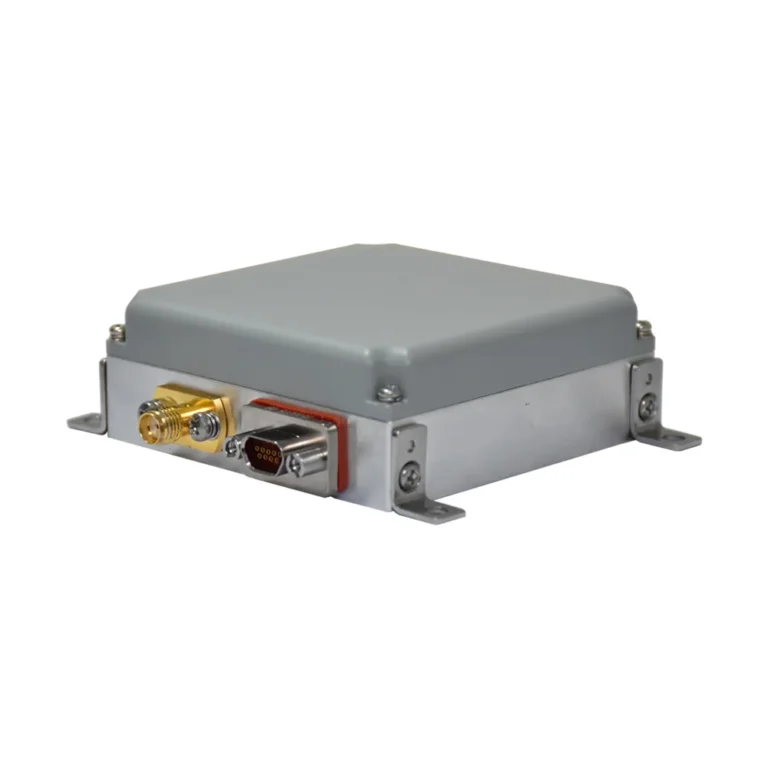
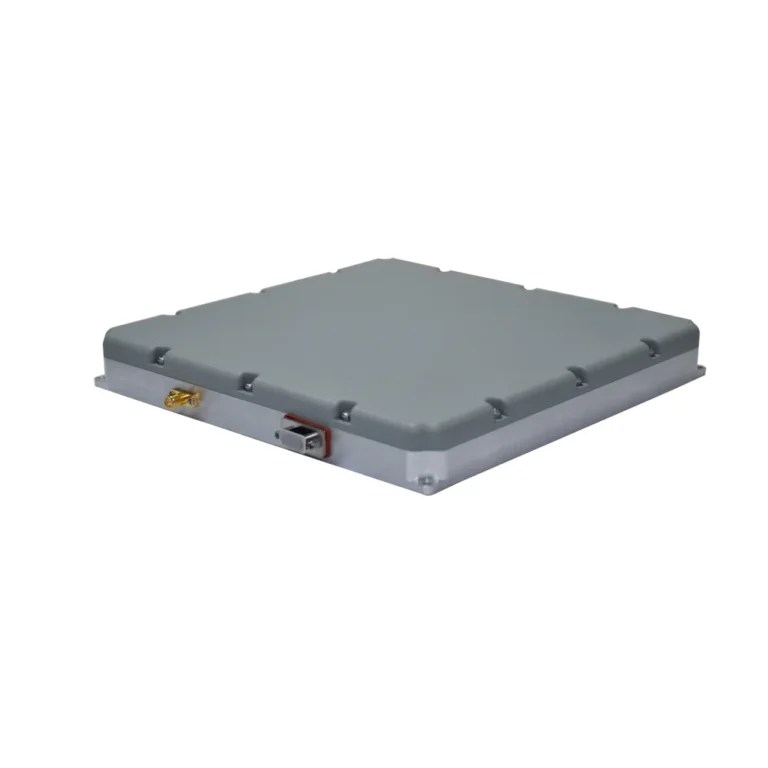
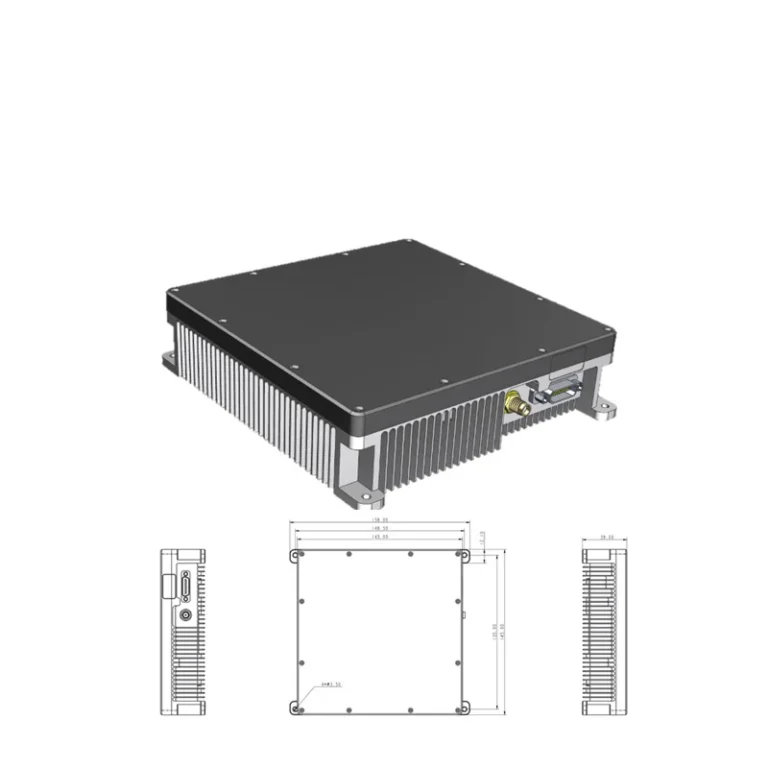
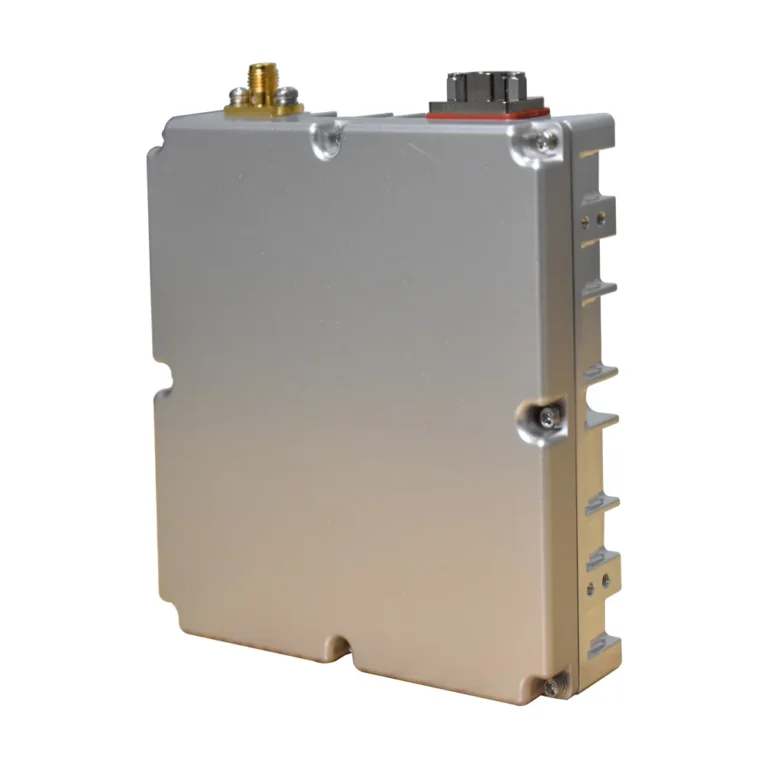
The core objective is singular: to maximize reception of useful signals (such as GPS, BeiDou satellite signals, and remote control signals) while minimizing interference signals in complex electromagnetic environments.
This is akin to focusing on one person’s voice in a noisy, crowded room. Your ears (antennas) and brain (signal processor) instinctively:
1. Orient toward the speaker (enhancing the desired signal).
2. Ignore noise from other directions (suppress interference signals).
Anti-Jamming antennas for drones achieve this process through technical means. Their principles can be understood primarily across three dimensions: spatial domain, frequency domain, and polarization domain.
I. Spatial Domain Anti-Jamming – The Core and Most Powerful Technology
This is the mainstream approach in current high-end Anti-Jamming technology, centered on “spatial filtering.”
Basic Principle: Utilizing an array of multiple antenna elements (rather than a single antenna), it employs advanced signal processing algorithms to dynamically form directional beam patterns in real time.
Key Technology: Adaptive Zero-Tuning Antenna
1. Environmental Perception: The antenna array simultaneously receives signals from all directions in space, including both useful satellite/remote control signals and harmful interference signals.
2. Direction Calculation: The built-in digital signal processor analyzes all received signals in real time. By comparing the phase differences between signals received by different antenna elements, it precisely calculates the arrival directions of both useful signals and interference signals.
3. Dynamic Beamforming:
· The processor instantly adjusts the weighting (amplitude and phase) of signals received by each antenna element.
· This adjustment creates one or more deep “zero-dip” regions in the received beam pattern, precisely aligned with the interference source. In this direction, the antenna’s reception gain becomes extremely low, effectively “blocking out” the interference.
· Simultaneously, the main lobe of the beam remains constantly aligned with the desired satellite or control station, ensuring robust reception of the useful signal.
Analogy: It functions like an automatically morphing “earpiece array.” When noise approaches from the left, the array automatically creates an “auditory blind spot” on the left side while keeping its optimal listening focus fixed on the speaker.
Advantages:
· Highly effective against multiple interference sources from different directions.
· Exceptionally strong suppression, typically achieving 20-40dB (equivalent to reducing interference power by 100 to 10,000 times).
Challenges:
· Complex system with high costs.
· Requires multiple antenna units and high-speed processors, imposing constraints on drone size, weight, and power consumption.
II. Frequency Domain Anti-Jamming – Fundamental and Critical Technology
Basic Principle: Exploiting the frequency difference between interference signals and useful signals, filters are employed to reject out-of-band interference.
Implementation Methods:
· Fixed Bandpass Filters: Only permit specific navigation bands (e.g., GPS L1: 1575.42 MHz) or communication bands to pass through, rigorously blocking interference outside the designated frequency range. This is standard equipment for all antennas.
· Adaptive Trap Filter: Real-time detection of narrowband interference frequencies within the band, dynamically generating an extremely narrow stopband (trap) at that frequency to filter it out without affecting reception of other useful signals across the entire band.
Analogy: Like a radio tuning knob—when you dial to FM 101.7 MHz, it filters out all other frequencies, letting you listen only to the desired station.
Advantages:
· Mature technology with low cost.
· Highly effective against out-of-band interference (interference frequencies outside the operating band).
Disadvantages:
· Limited effectiveness against in-band interference (especially spoofing interference) that matches the useful signal’s frequency exactly.
III. Polarization-Based Anti-Jamming – A Natural Auxiliary Method
Basic Principle: Utilizes the polarization characteristics of electromagnetic waves. Satellite navigation signals (e.g., GPS) typically employ right-hand circularly polarized waves.
· Anti-jamming antennas are designed for maximum reception sensitivity to right-hand circularly polarized waves.
· Many natural and man-made interferences (especially those from simple jammers) are linearly polarized or left-hand circularly polarized waves.
· Antennas inherently suppress signals with these differing polarization modes.
Analogy: Like a specialized screwdriver that only works on Phillips screws (right-handed circular polarization), it is ineffective on flathead screws (linear polarization) or reverse Phillips screws (left-handed circular polarization).
Advantages:
· Simple implementation without adding extra cost or complexity.
· As a fundamental anti-jamming feature, it is widely adopted in navigation antennas across all tiers.
Disadvantages:
· This method becomes ineffective if the jammer employs the exact same polarization as the useful signal (right-hand circular polarization).
Principle Summary and Practical Systems
In practical anti-jamming antenna systems for drones, the above three principles typically work in concert to form a multi-layered defense system:
1. First Line of Defense (Polarization Domain): The antenna inherently attenuates non-matched polarization interference through its polarization characteristics.
2. Second Line of Defense (Frequency Domain): High-quality bandpass filters thoroughly eliminate broadband interference, mobile phone signals, broadcast TV signals, and other non-targeted signals outside the operational frequency band.
3. Third Line of Defense (Spatial Domain): For strong, targeted interference that penetrates the first two defenses and shares the same frequency and polarization as the useful signal, the adaptive nulling antenna array precisely “snipes” the interference in the spatial dimension, creating a null to deeply suppress it.
The ultimate result is that even in intense electromagnetic interference environments, the UAV can stably lock onto satellite signals, maintain precise positioning and reliable communications, thereby completing its predefined mission or returning safely.